How big are the UK's armed forces?
The UK had 137,482 regular service personnel in July 2026, down 9% on January 2016, plus 32,134 volunteer reservists. Military spending was 2.3% of GDP in 2024, 4th highest of the 16 economies we compare.
Full-time Royal Navy, Army and Royal Air Force, July 2026.
Part-time reservists, July 2026.
Of GDP, 2024. 4th highest of the 16 economies we compare.
Armed forces over time
What’s this?
The number of full-time UK regular personnel in the Royal Navy, Army and Royal Air Force, on the first day of each quarter.
What it cannot tell you: These are numbers of people, not their skills or readiness, and some staff in training are counted separately.
What’s this?
The number of part-time volunteer reservists in the three services, on the first day of each quarter.
What it cannot tell you: These are numbers of people, not their skills or readiness, and some staff in training are counted separately.
What’s this?
Everyone serving in the UK armed forces: regulars, Gurkhas, reserves and others, on the first day of each quarter.
What it cannot tell you: These are numbers of people, not their skills or readiness, and some staff in training are counted separately.
What’s this?
What a country spends on its armed forces, as a share of everything the economy produces.
What it cannot tell you: It says nothing about how effective the forces are, and some countries' official figures are disputed.
Quarter by quarter
| Period | UK regular armed forces | UK volunteer reserves | UK armed forces, all personnel |
|---|---|---|---|
| July 2026 | 137,482 | 32,134 | 182,984 |
| April 2026 | 137,966 | 32,034 | 183,407 |
| January 2026 | 136,957 | 32,026 | 182,052 |
| October 2025 | 137,102 | 31,940 | 182,063 |
| July 2025 | 136,030 | 31,777 | 180,775 |
| April 2025 | 136,998 | 31,905 | 181,894 |
| January 2025 | 136,117 | 31,967 | 180,779 |
| October 2024 | 136,861 | 32,050 | 181,547 |
| July 2024 | 136,525 | 32,145 | 181,318 |
| April 2024 | 138,121 | 32,423 | 183,230 |
Military spending, against other countries
Ranked, using the latest year the World Bank has for most of the 16 economies. The United Kingdom is picked out in the bar colour. Countries differ in size, climate and how they collect the figures, so a rank is a starting point, not a verdict.
Military spending, 2024: UK 4th of 16
What a country spends on its armed forces, as a share of everything the economy produces. % of GDP.
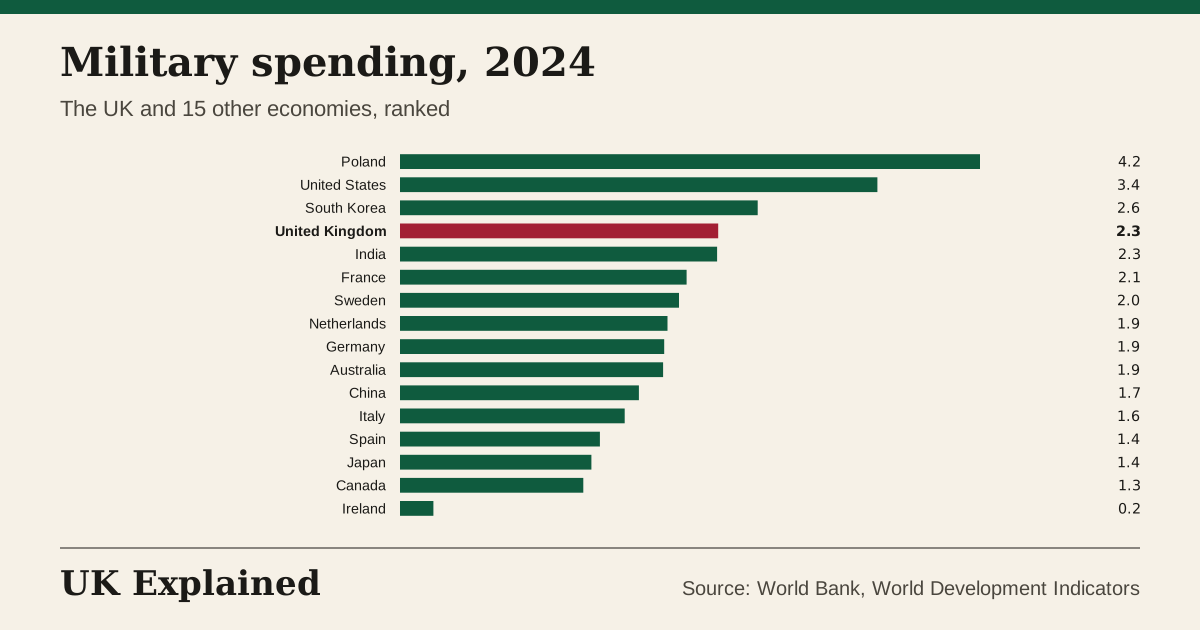
What it cannot tell you: It says nothing about how effective the forces are, and some countries' official figures are disputed.
Military spending as a share of government spending, 2024: UK 5th of 16
Military spending as a share of everything the government spends. % of government spending.
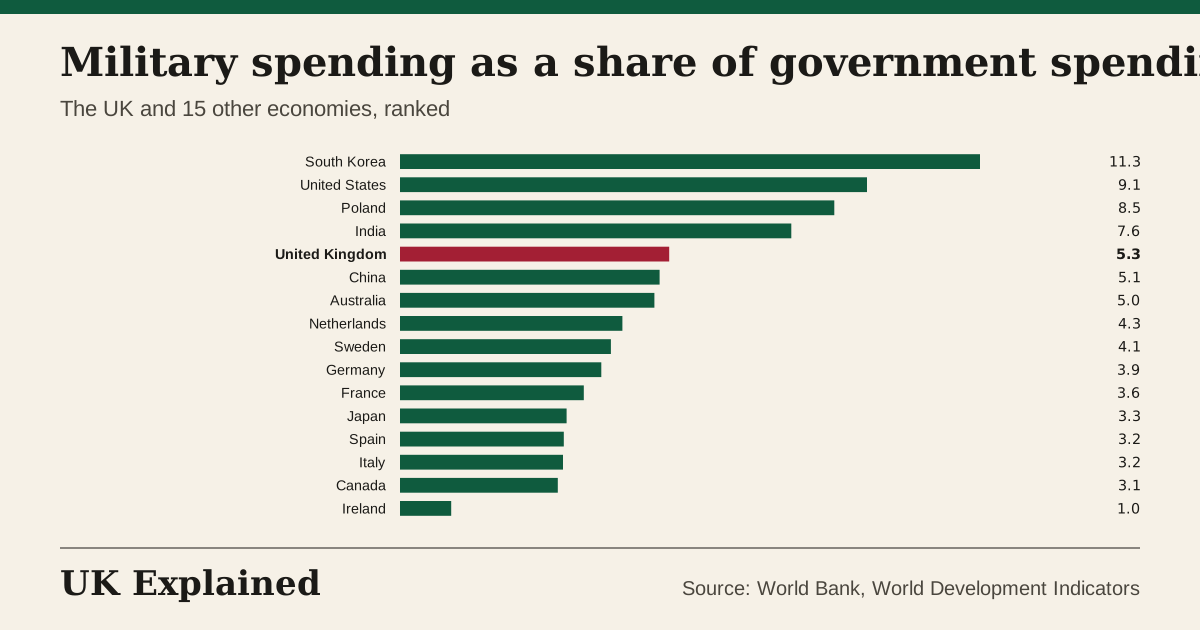
What it cannot tell you: Countries differ in what else the government pays for, such as health care.
Questions people ask
How many people are in the British Army, Navy and RAF?
137,482 full-time regulars in total on July 2026, plus 32,134 volunteer reservists (Ministry of Defence).
How much does the UK spend on defence?
2.3% of GDP in 2024 on the World Bank's definition. For the government's own figure in pounds see defence spending.
What does “uk regular armed forces” measure?
The number of full-time UK regular personnel in the Royal Navy, Army and Royal Air Force, on the first day of each quarter. It was 137,482 (people) in July 2026, down 7% on January 2021. The highest we have is 179,804 (April 2012) and the lowest 136,030 (July 2025).
What does “uk volunteer reserves” measure?
The number of part-time volunteer reservists in the three services, on the first day of each quarter. It was 32,134 (people) in July 2026, down 13% on January 2021. The highest we have is 37,415 (April 2021) and the lowest 28,726 (January 2014).
What does “uk armed forces, all personnel” measure?
Everyone serving in the UK armed forces: regulars, Gurkhas, reserves and others, on the first day of each quarter. It was 182,984 (people) in July 2026, down 7% on January 2021. The highest we have is 221,327 (April 2012) and the lowest 180,775 (July 2025).
What does “uk: military spending” measure?
What a country spends on its armed forces, as a share of everything the economy produces. It was 2.3% (% of GDP) in 2024, up 0.3 points on 2019. The highest we have is 4.1% (1991) and the lowest 1.9% (2018).
Sources: Ministry of Defence, UK armed forces quarterly service personnel statistics; World Bank, World Development Indicators and the World Bank. Updated every night. Each chart has a CSV and a Share button.
See also: Defence spending